

Brief
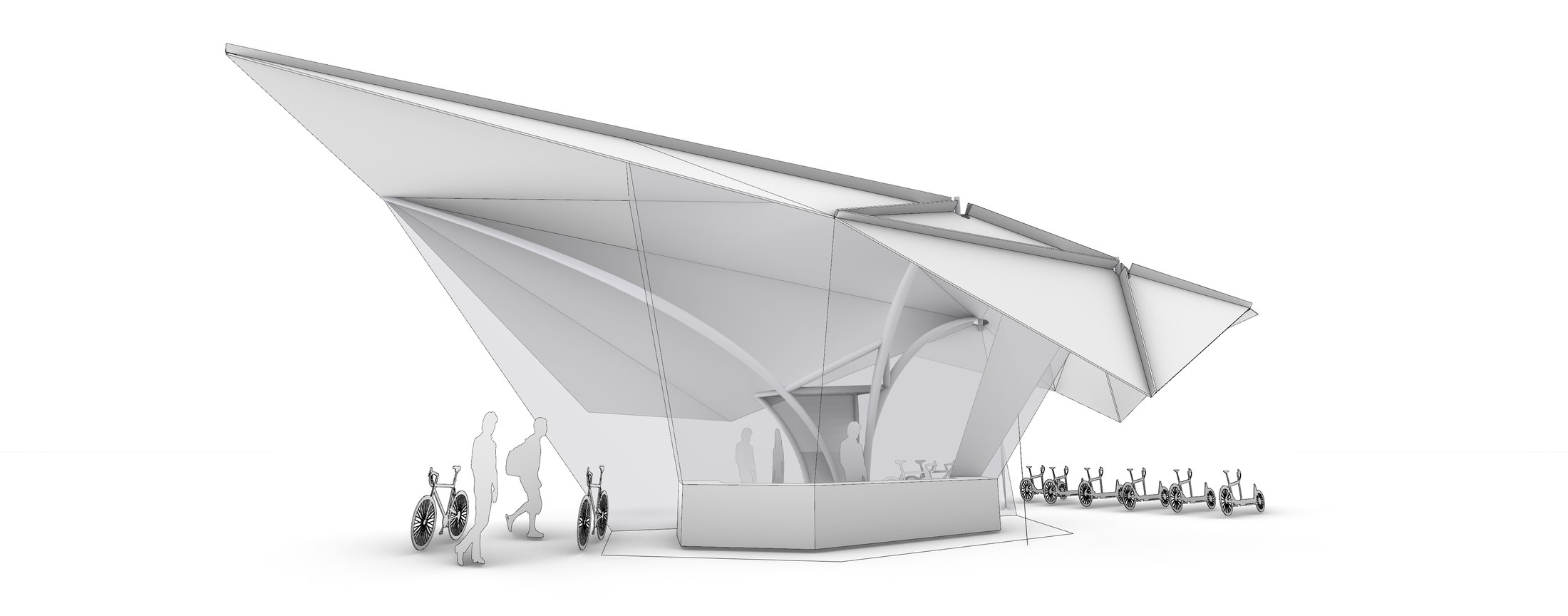
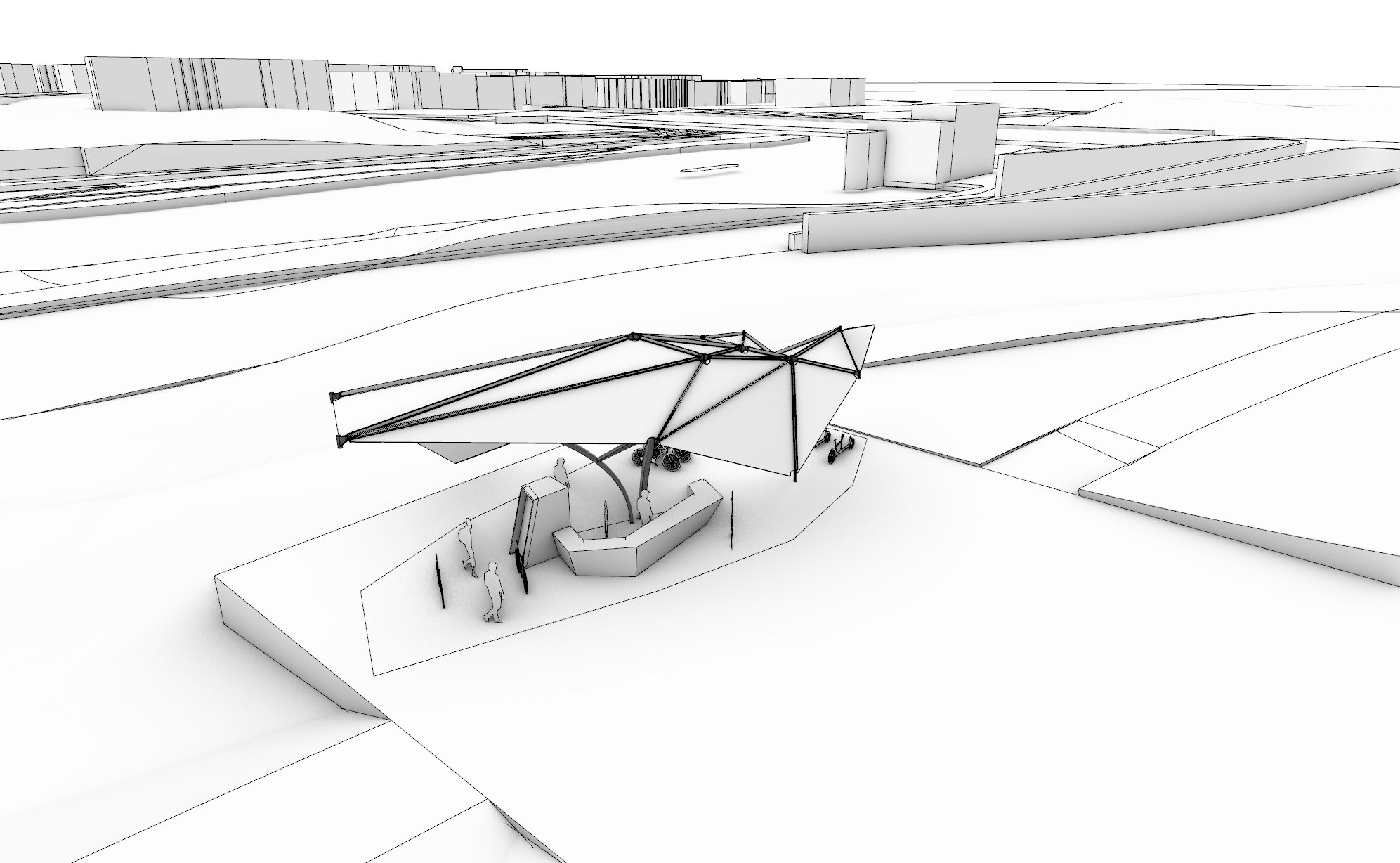
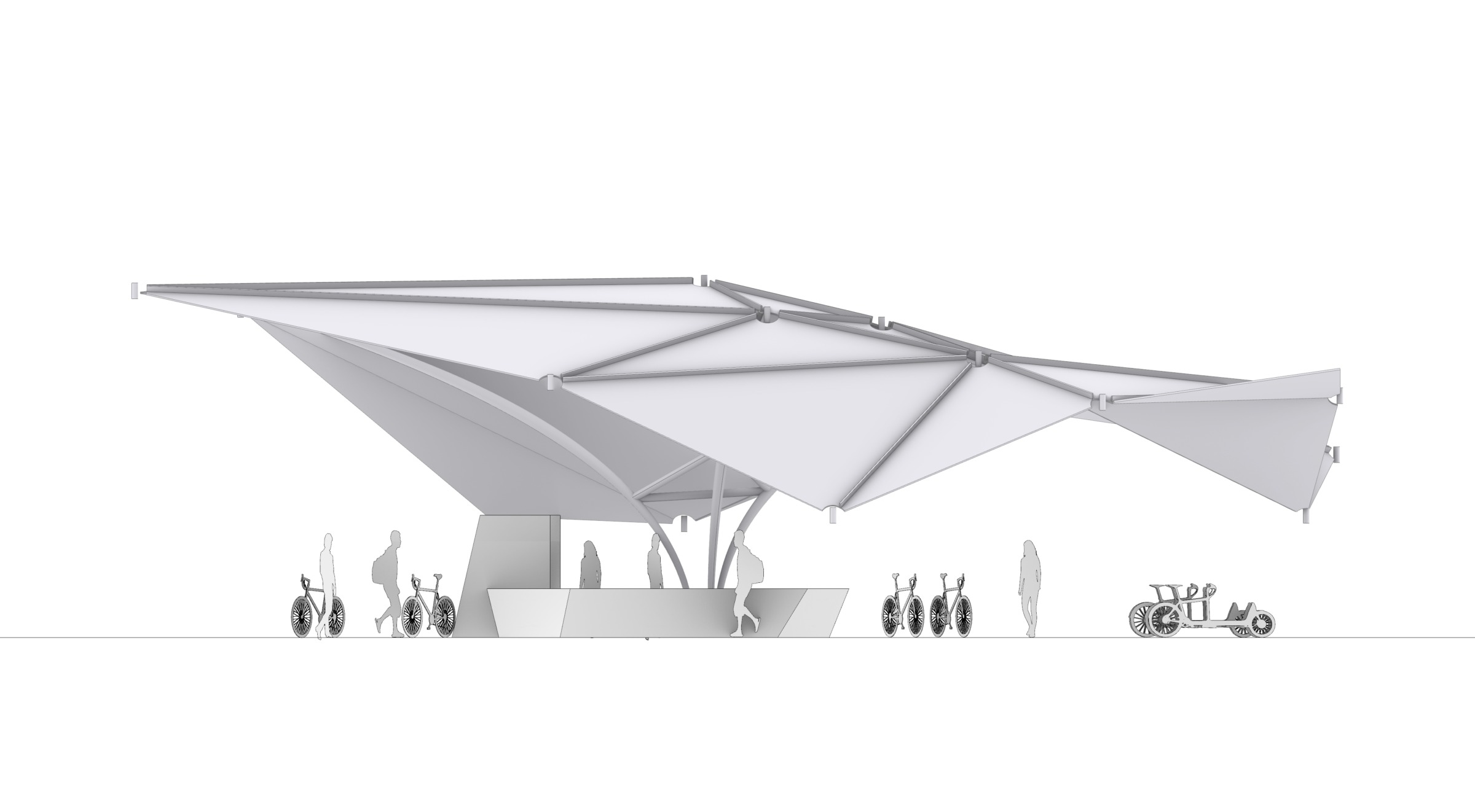
Infrastructure(de)Light explores future e-mobility infrastructure as a network of compact civic hubs along the Neckar riverfront in Stuttgart. Rather than treating charging, repair and orientation as purely technical equipment, the project proposes lightweight public canopies: small places for movement, rest, exchange and everyday support.
Concept
The hub is conceived as part of an adaptable family. Different versions can respond to the intensity of each location, from a minimal charging point to a larger social node with shelter, information, repair and meeting functions. The ground plane remains open while the folded canopy gives the infrastructure a visible civic presence.
Lightweight system
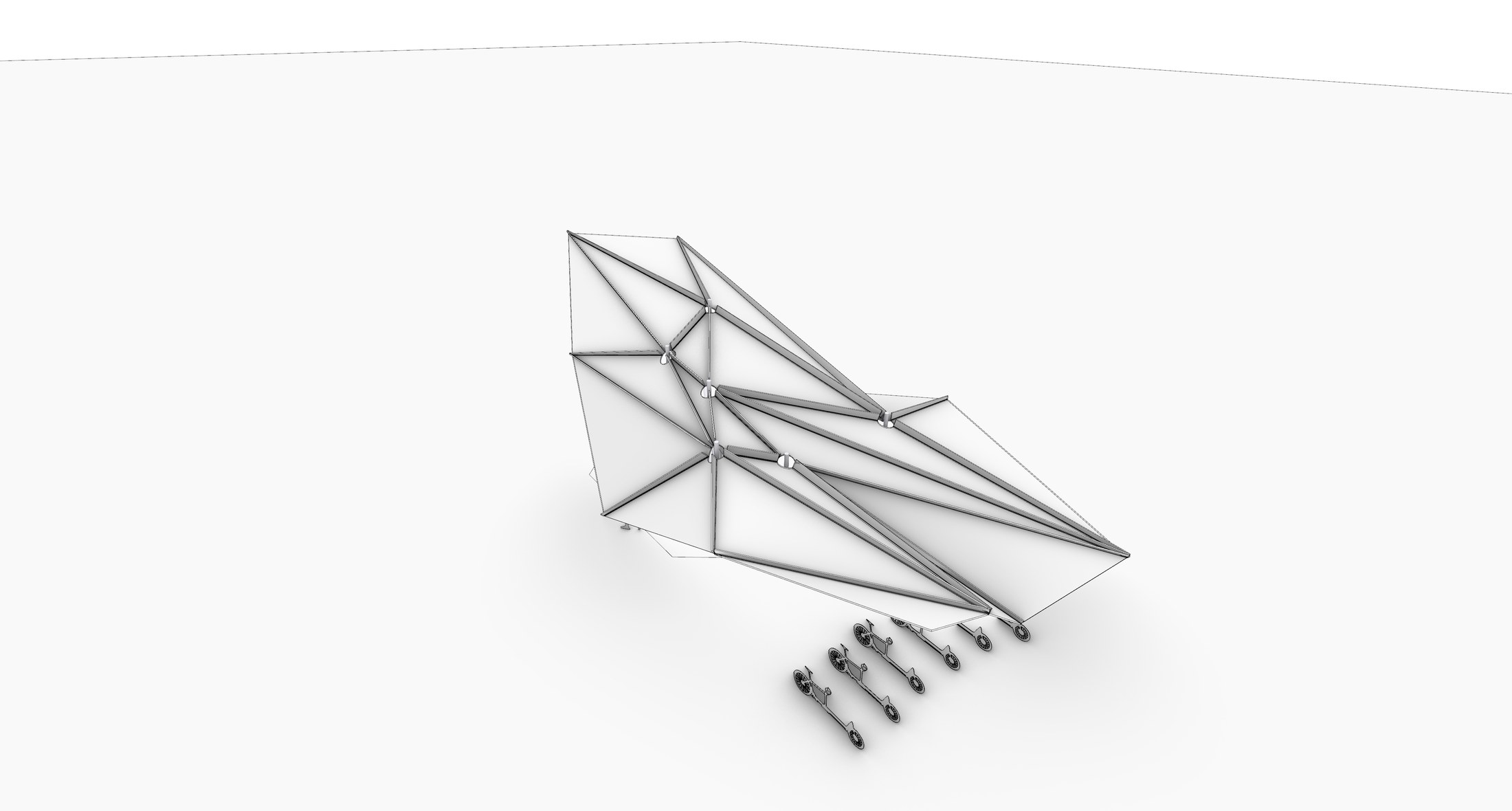
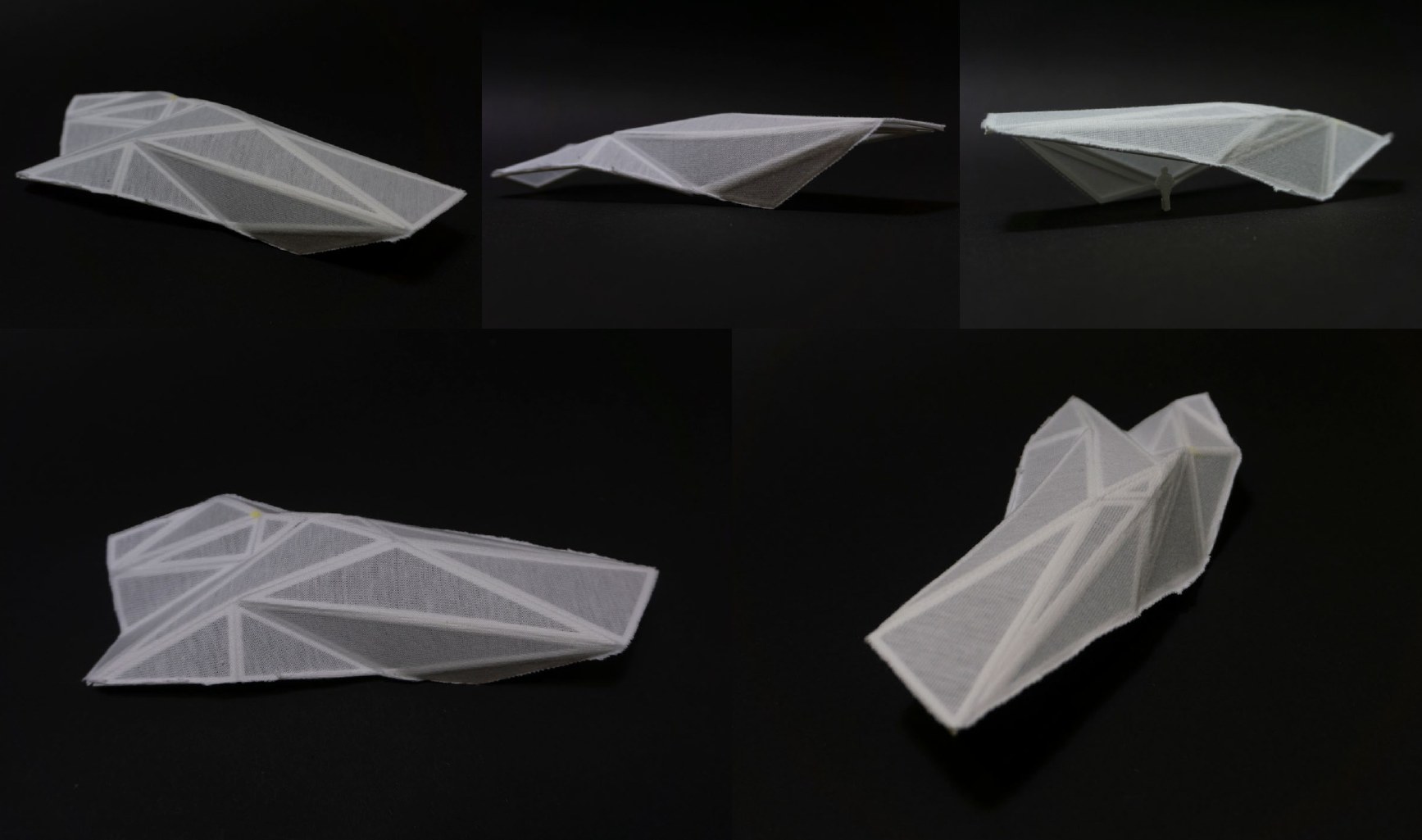
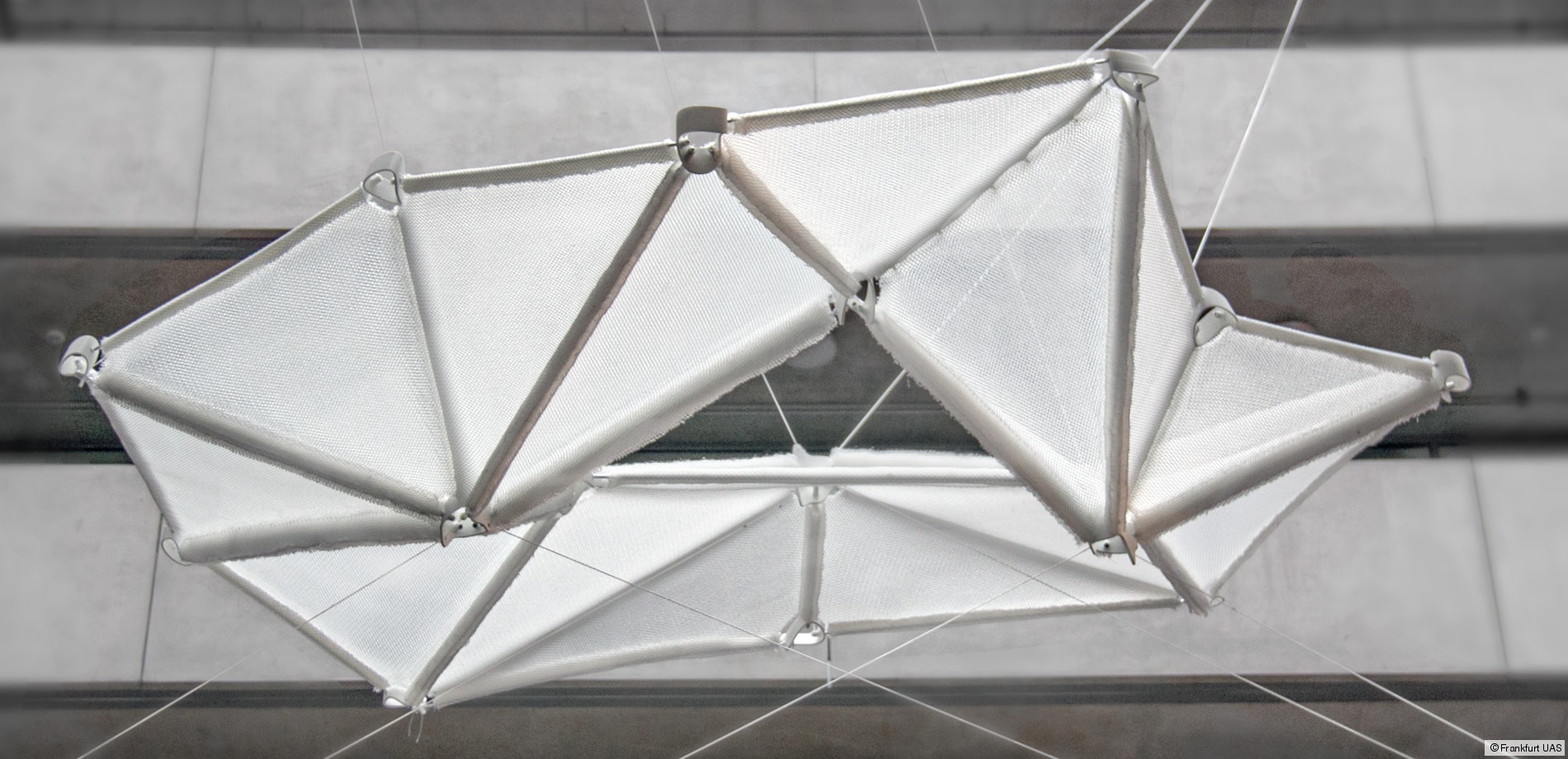
The architectural proposal was developed alongside the FoldedFabric material seminar at FRA-UAS. In this crossover, textile materialisation, folding geometry, 3D-printed stiffening patterns and connection logic were investigated in parallel with the hub design. The lightweight canopy therefore connects urban infrastructure with material research instead of treating them as separate exercises.
Demonstrator
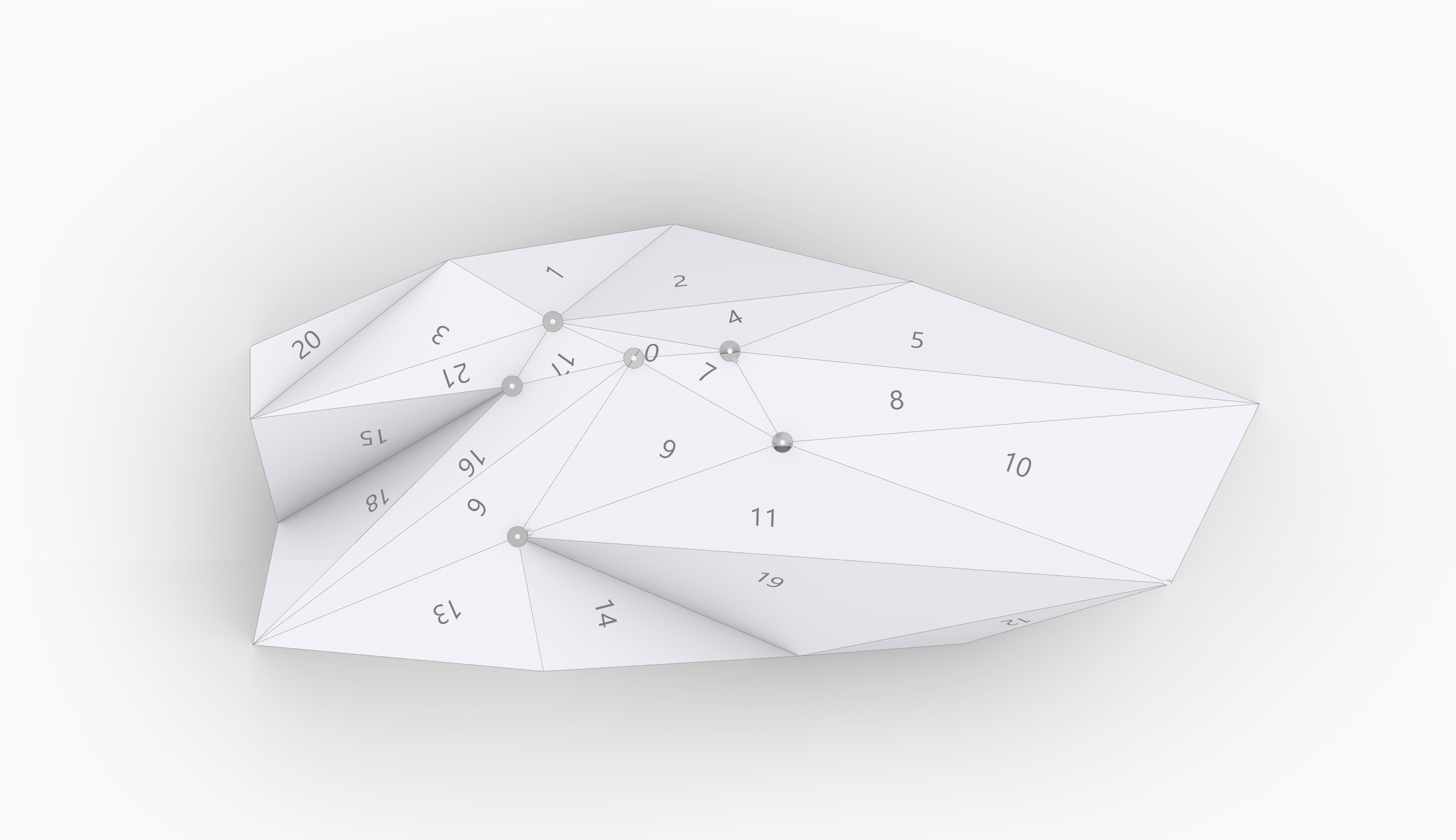
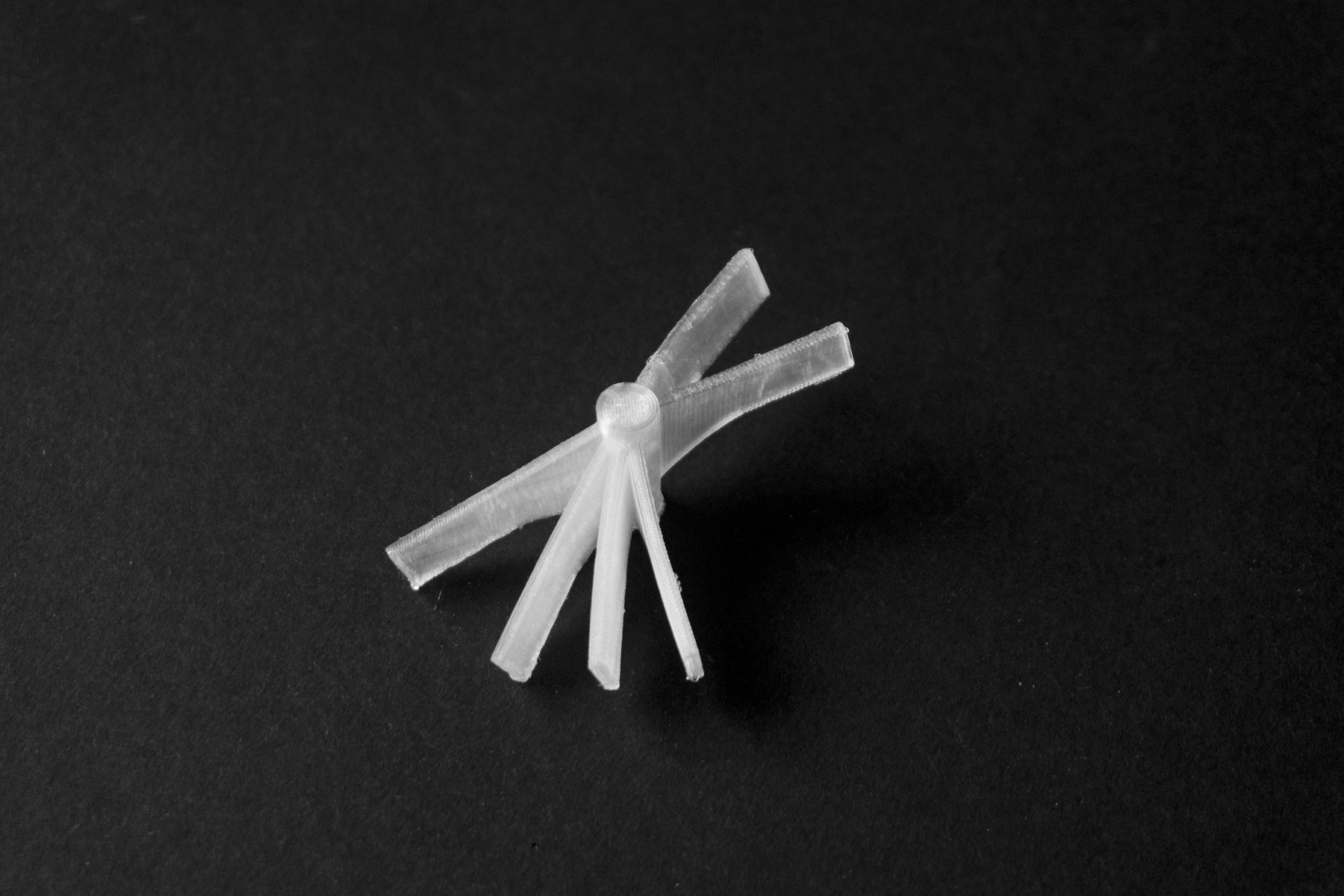
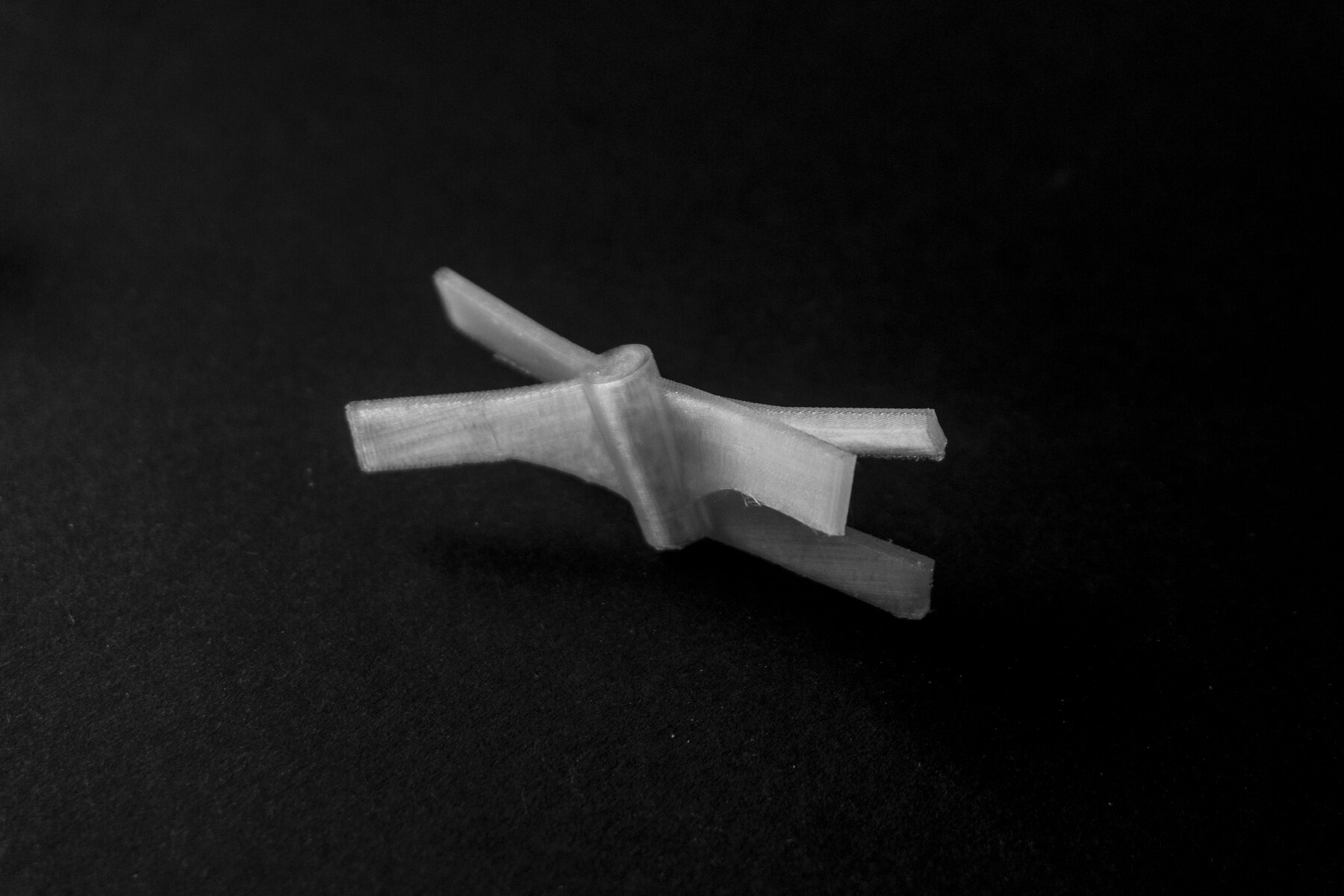
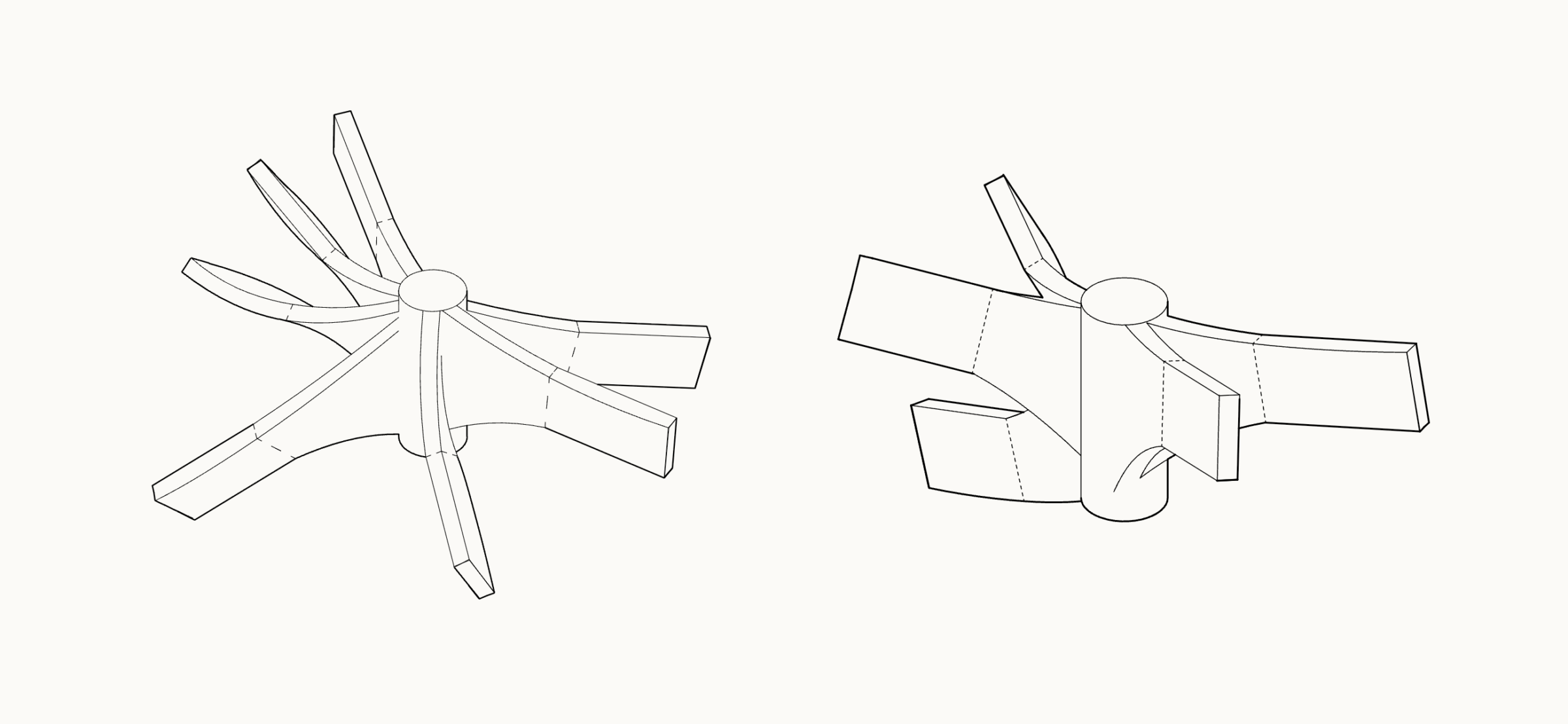
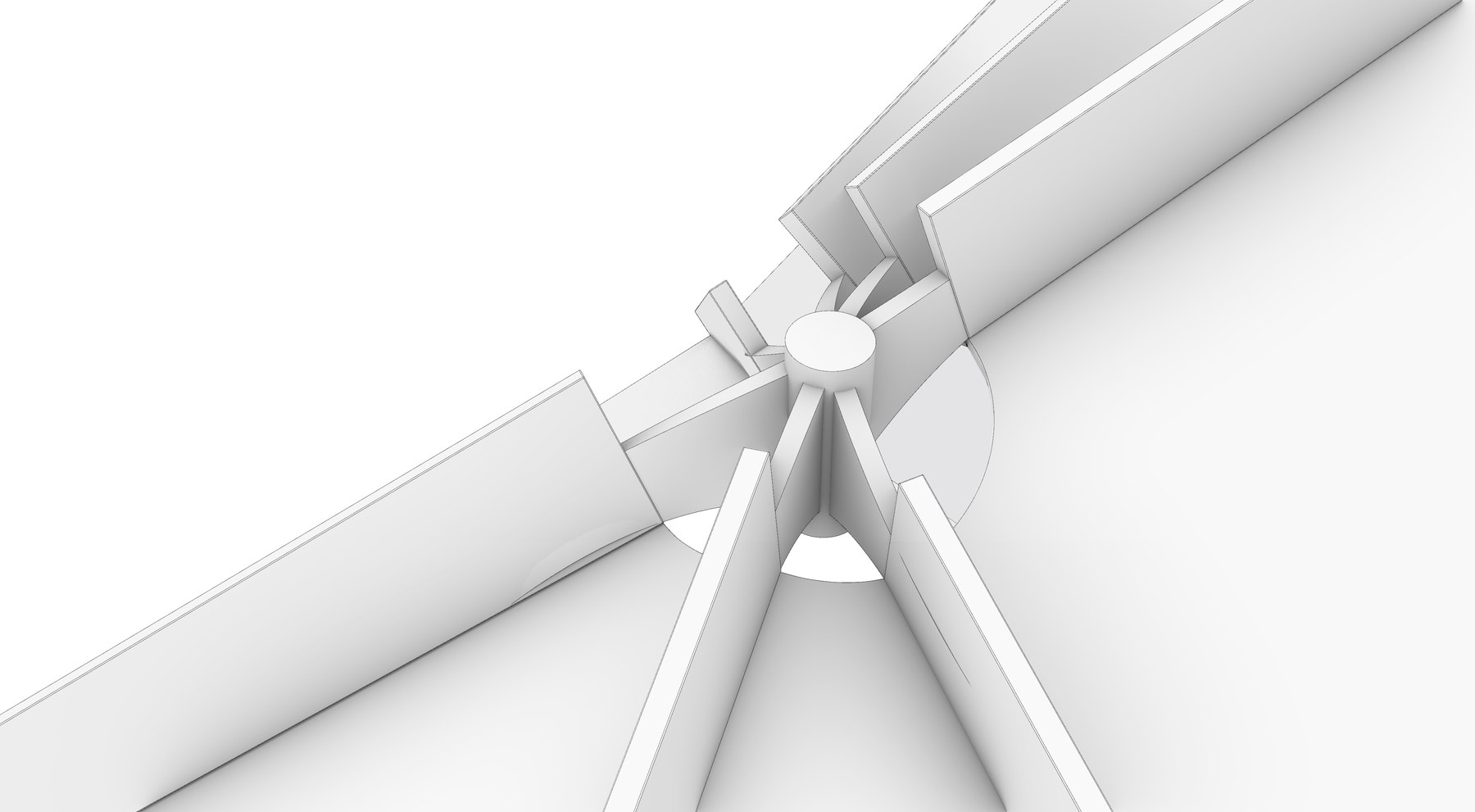
The semester culminated in a textile-based 1:1 demonstrator. Digital methods were used to generate folding geometry and cutting patterns, while the necessary connection elements were 3D printed. The demonstrator documents the construction logic behind the architectural hub family and gives the research layer a built, material scale.
Method
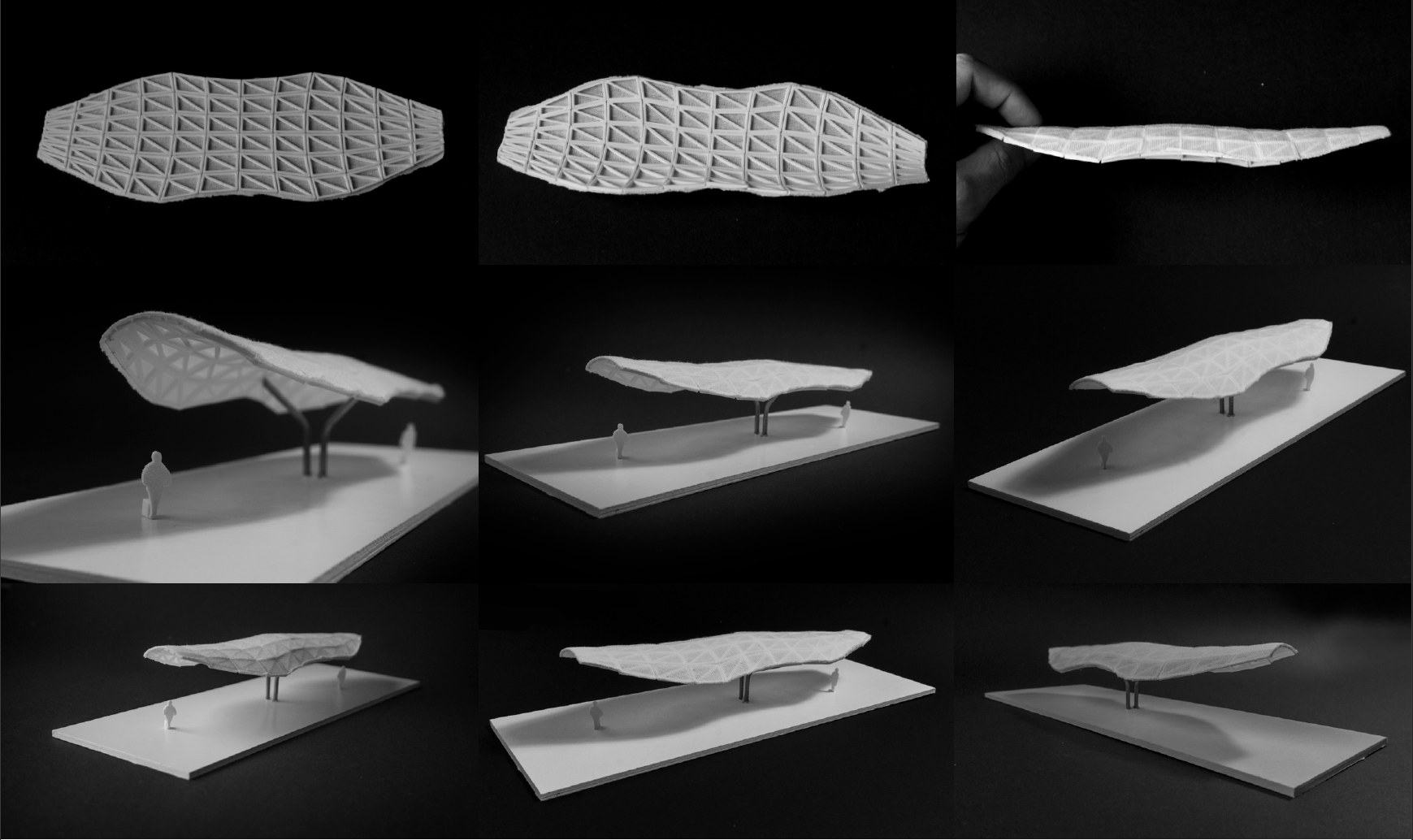
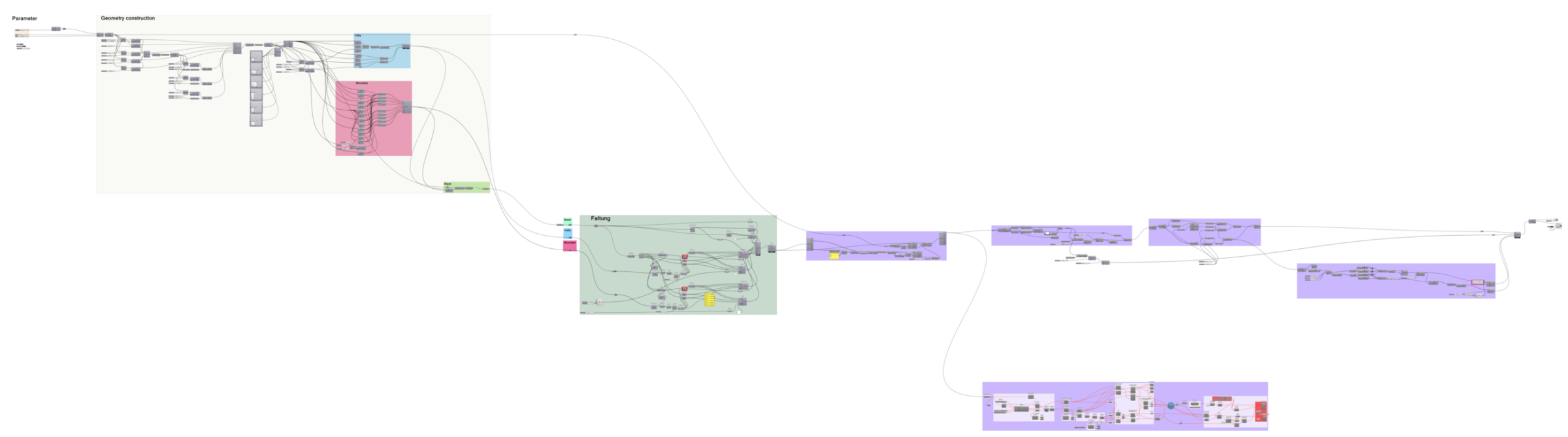
The form is generated through a parametric workflow in Rhino and Grasshopper, using Kangaroo simulations to relax folding lines and boundary constraints into stable spatial configurations. Physical model studies, node prototypes and film documentation test how the simulated surface could become a buildable textile canopy. The final output is both an e-mobility hub proposal and a reproducible design process for lightweight civic infrastructure.