

Research Question
Adaptive Sun Skins investigates lightweight facade carrier systems for building-integrated organic photovoltaics. Rather than treating photovoltaic integration as a flat technical add-on, the research asks how carrier geometry, material build-up, solar orientation, structural stiffness, visibility, and architectural expression can be developed as one system.
The project responds to a central problem of urban energy production: photovoltaic surfaces are increasingly necessary, but their integration into the building envelope has to negotiate more than performance alone. It also has to address material economy, fabrication, transparency, visual acceptance, and the architectural quality of the facade.
Parametric Component Families
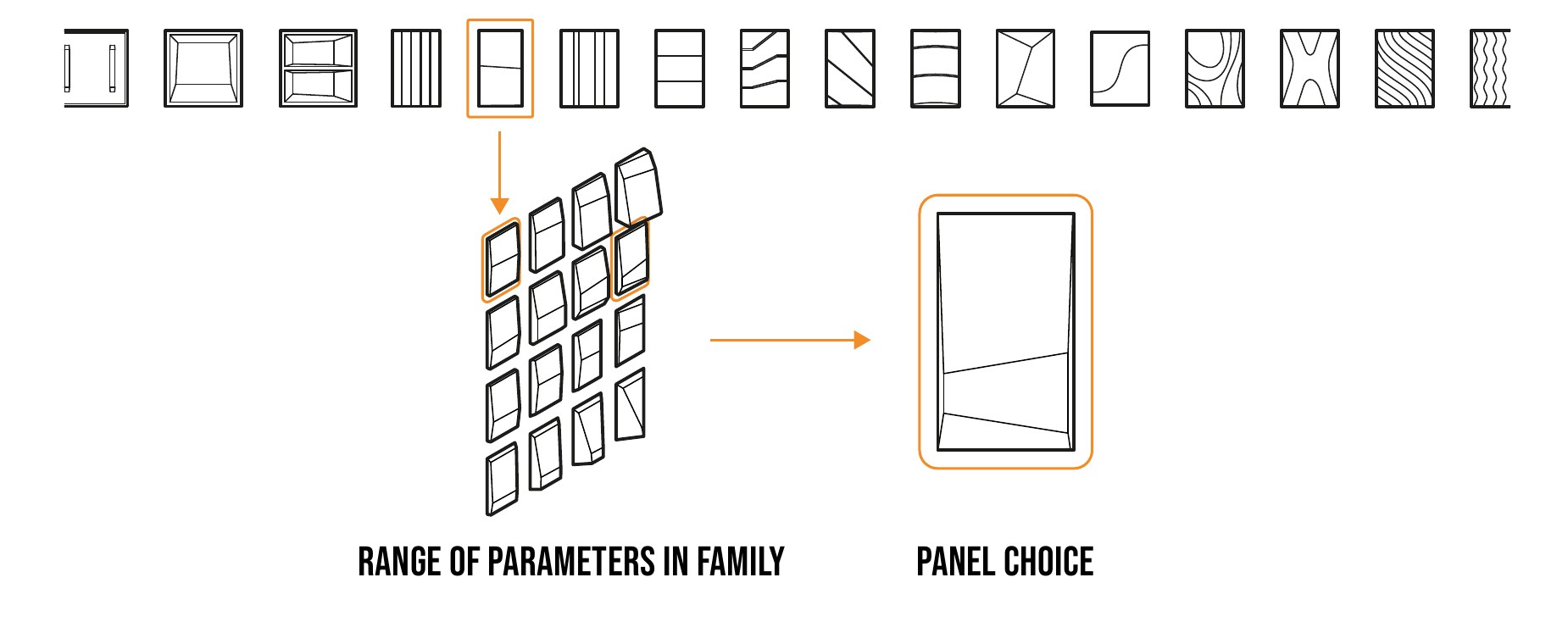
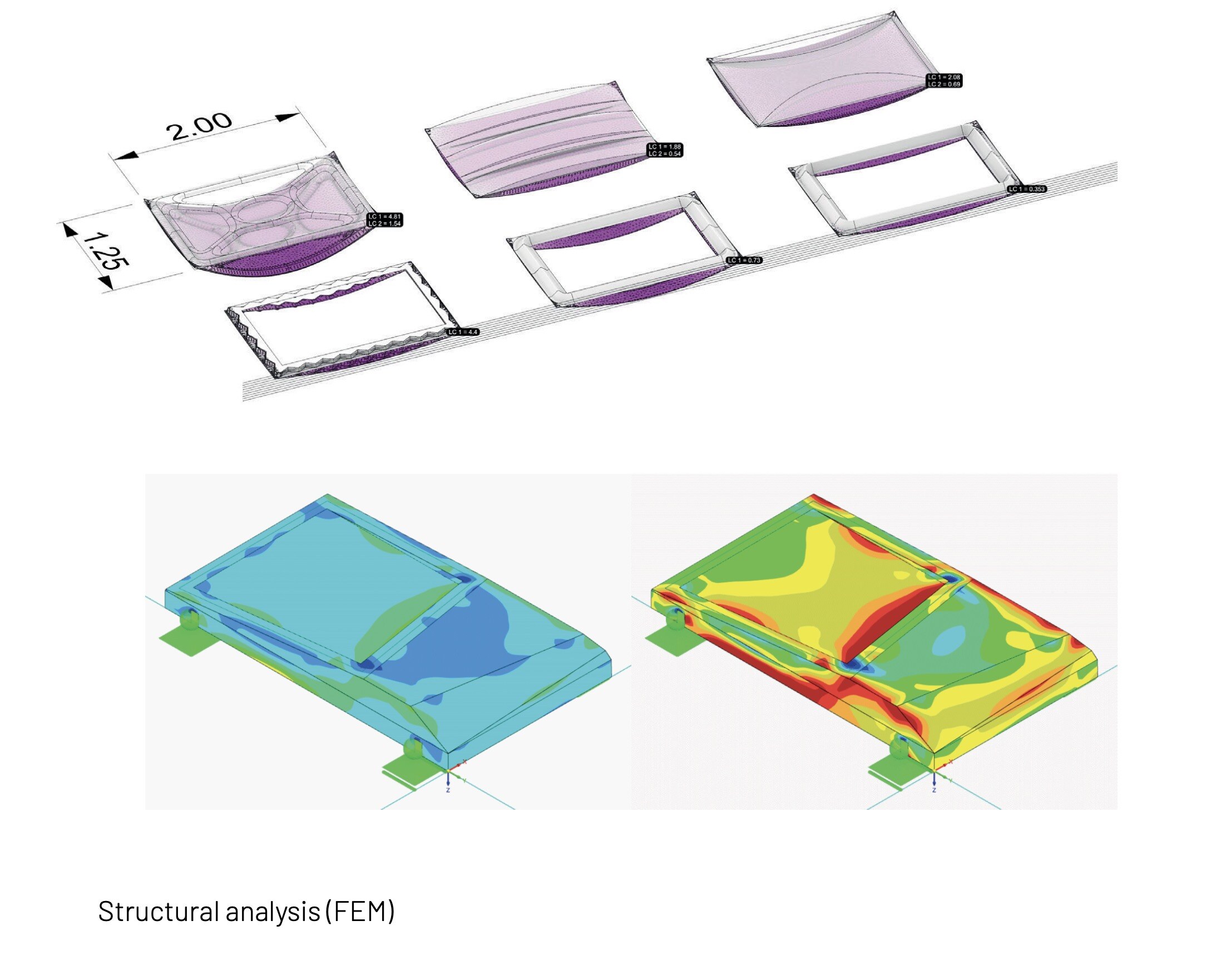
The research is organized around a parametric workflow that generates families of carrier geometries. Folded surfaces, ribs, edge conditions, and local stiffening strategies are varied within a controlled design space and evaluated through solar and structural feedback. The aim is not a single panel, but a repeatable method for adapting facade components to different performance, fabrication, and design conditions.
Material Logic
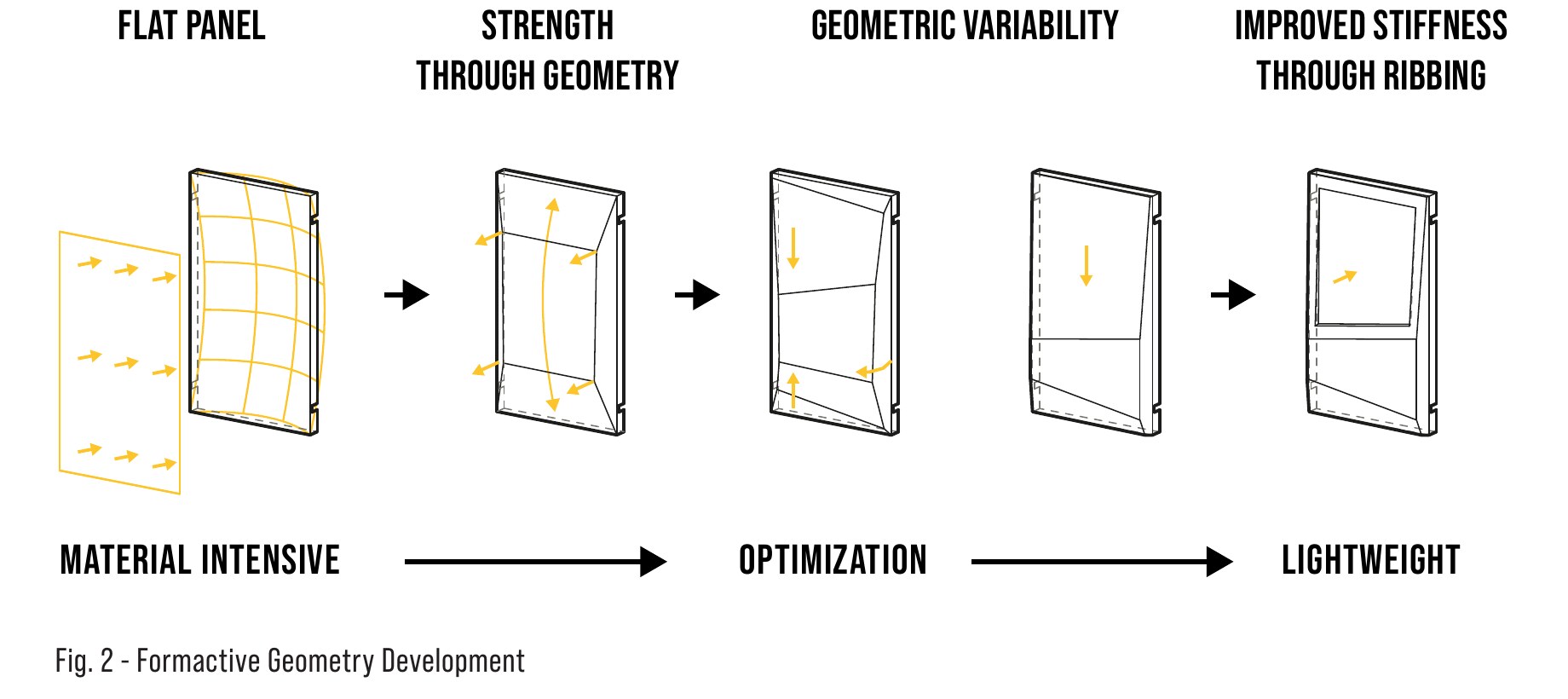
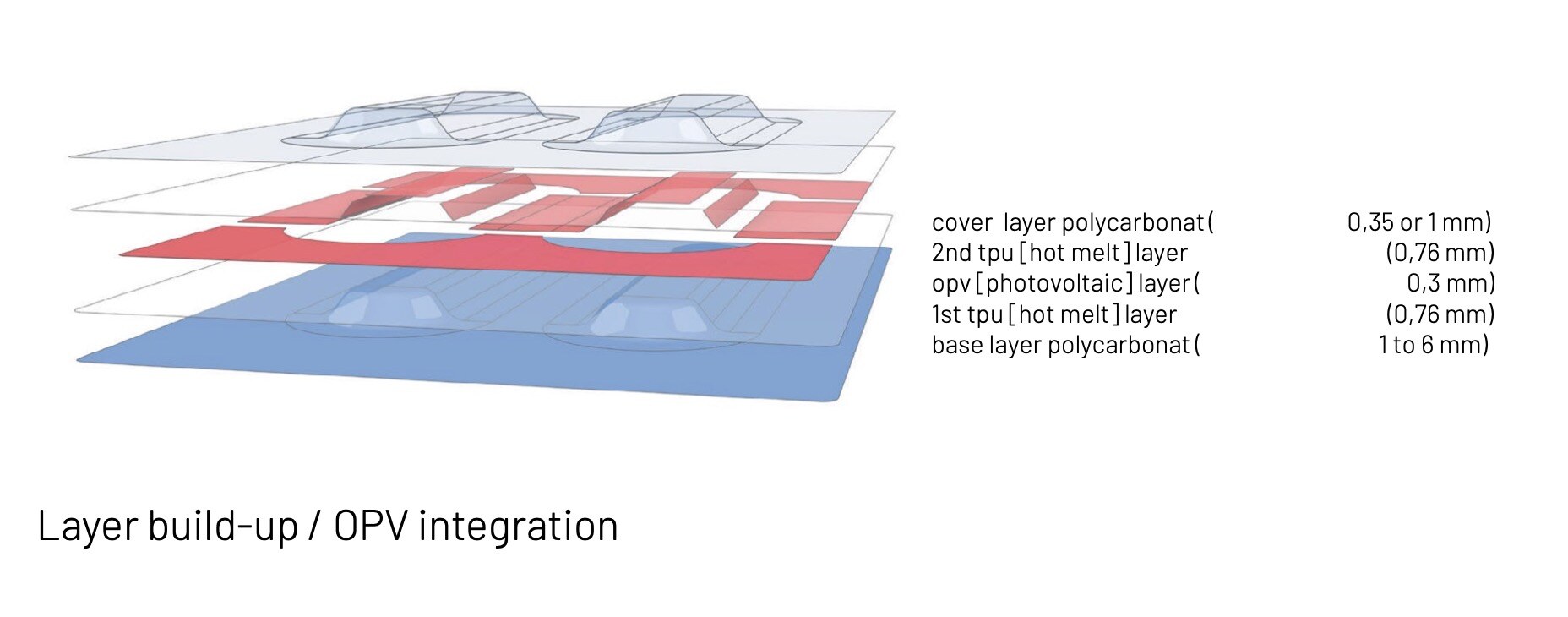
The proposed build-up combines thermoformed polycarbonate with organic photovoltaic layers and TPU hotmelt interlayers. In this logic, stiffness is produced less through material thickness than through three-dimensional surface articulation. The facade element becomes light, transparent, and geometrically adaptable while remaining tied to fabrication and assembly constraints.
Evaluation + Prototyping
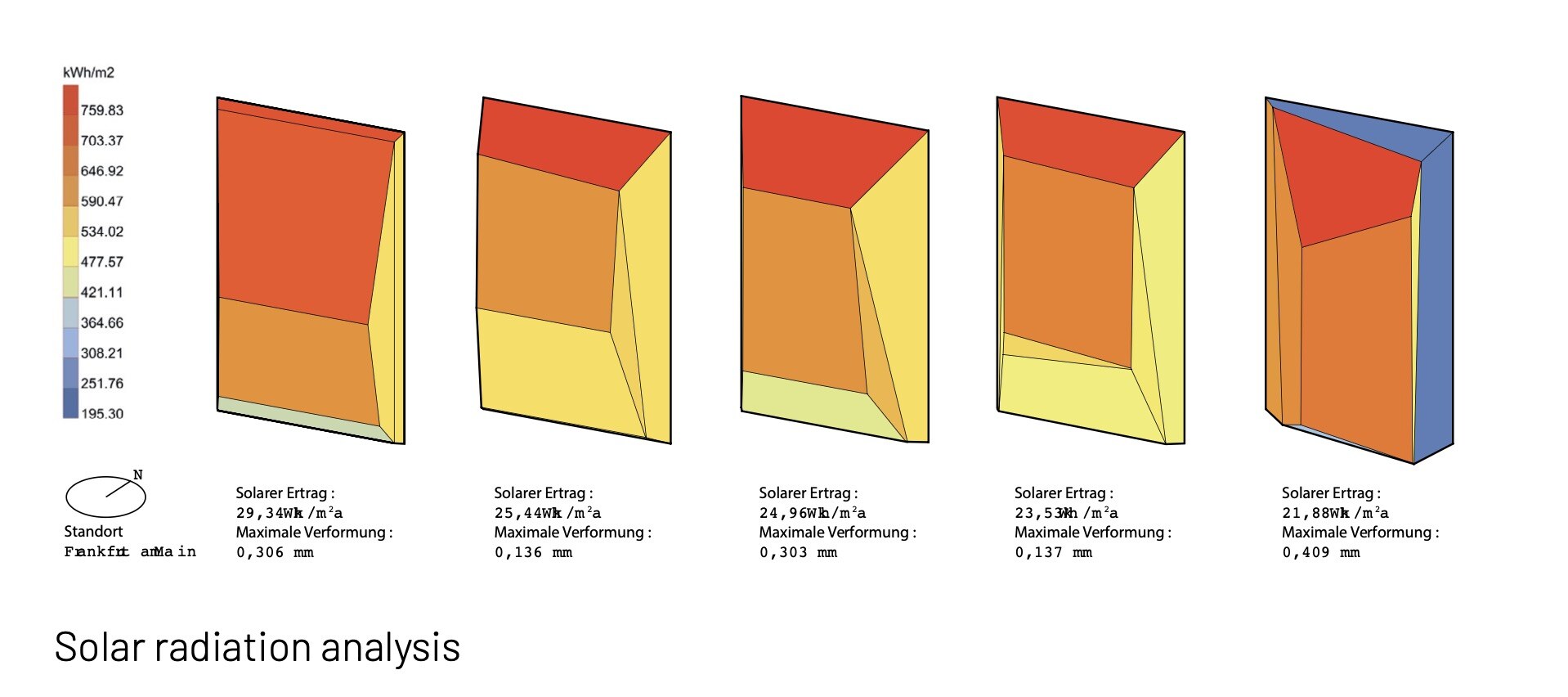
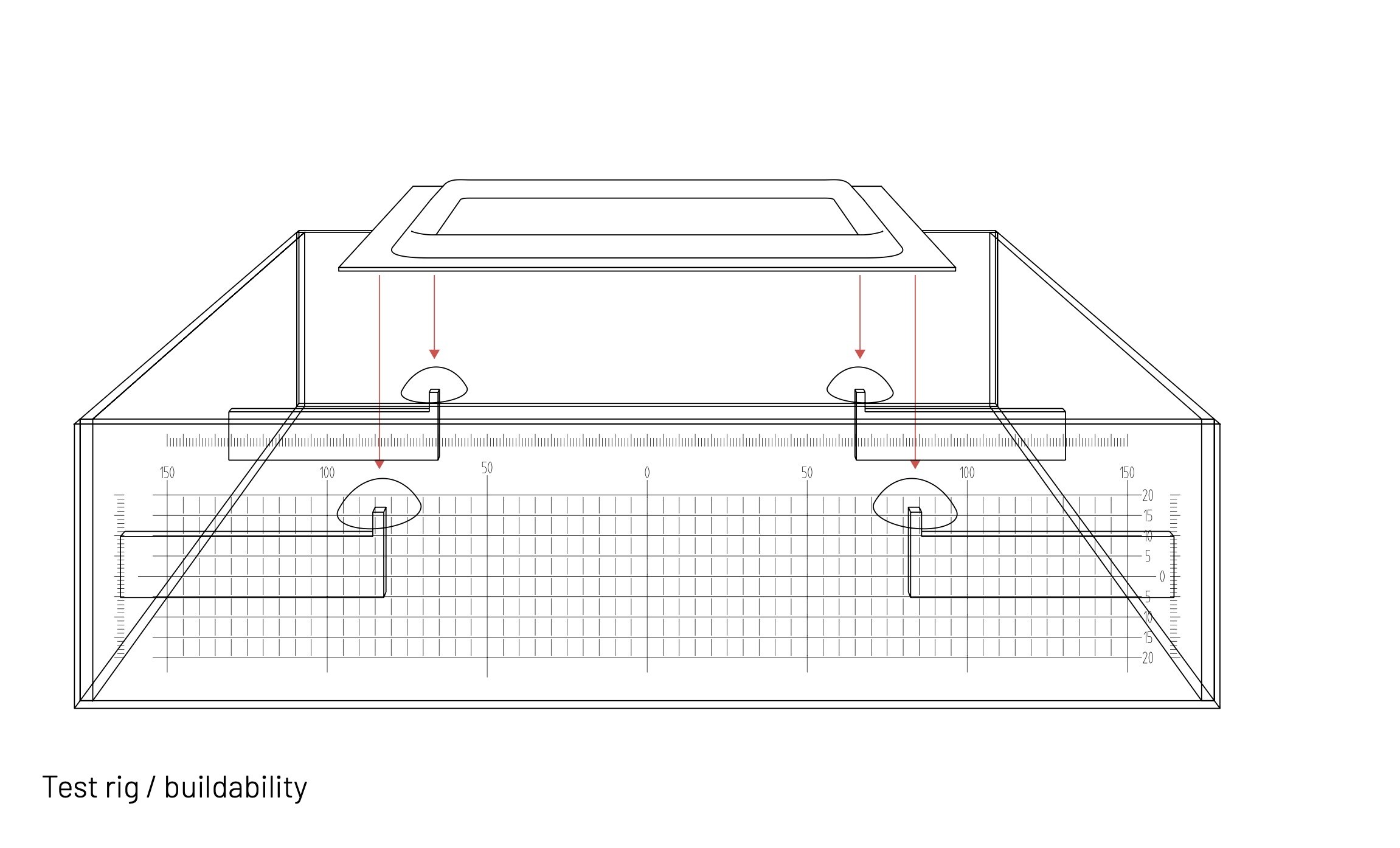
Solar radiation analysis, simplified structural evaluation, detailed FEM studies, physical prototypes, and test setups are used to test the feasibility of the component families. The research moves between digital simulation and material validation, linking performance criteria to buildability and public communication.
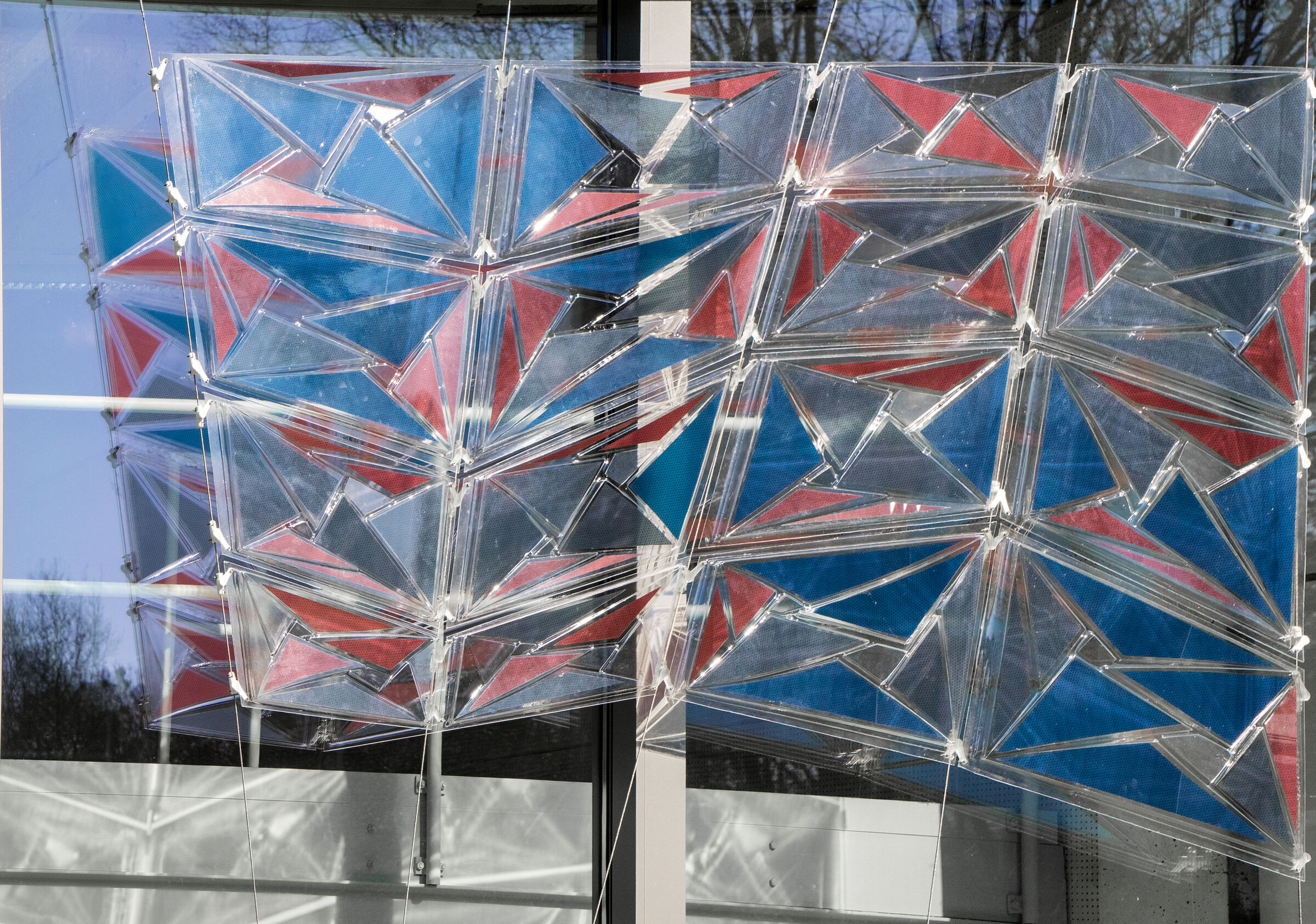
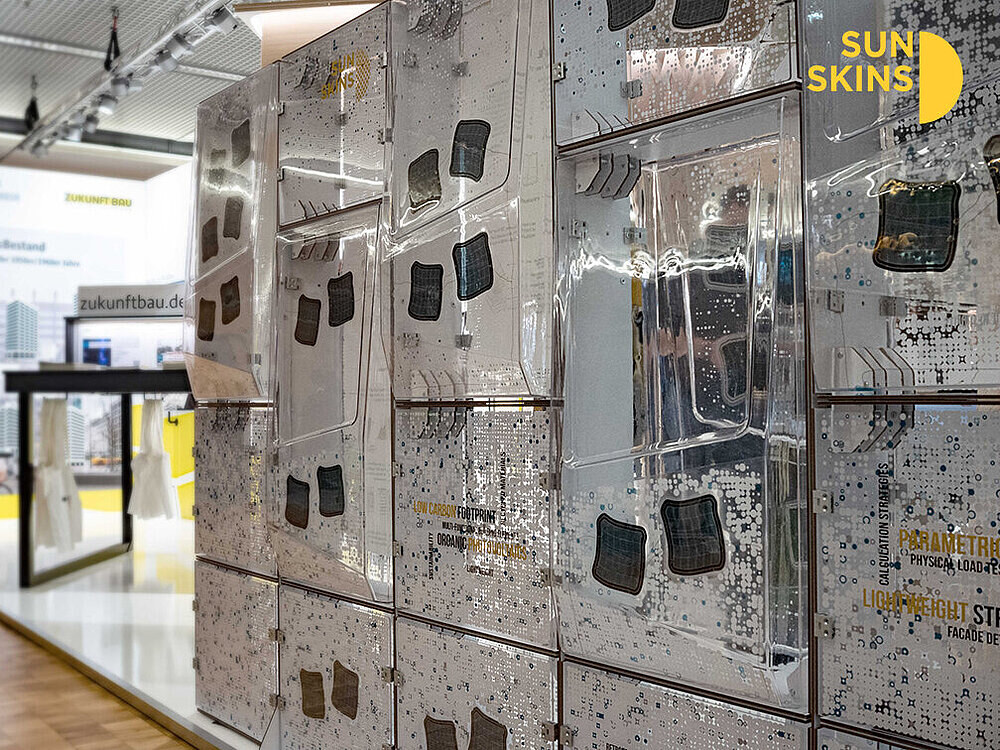
The demonstrator work makes the research tangible. Thermoforming, lamination, OPV integration, test rigs, and exhibition formats translate the digital workflow into a physical facade system that can be inspected, discussed, and further developed.
Contribution
Within the research team, I worked across both digital and physical development. My contribution included Grasshopper-based parametric workflows, component-family studies, simulation setup, hands-on physical prototyping, test setups, prototype assembly studies, and visual material for publication and exhibition contexts.