

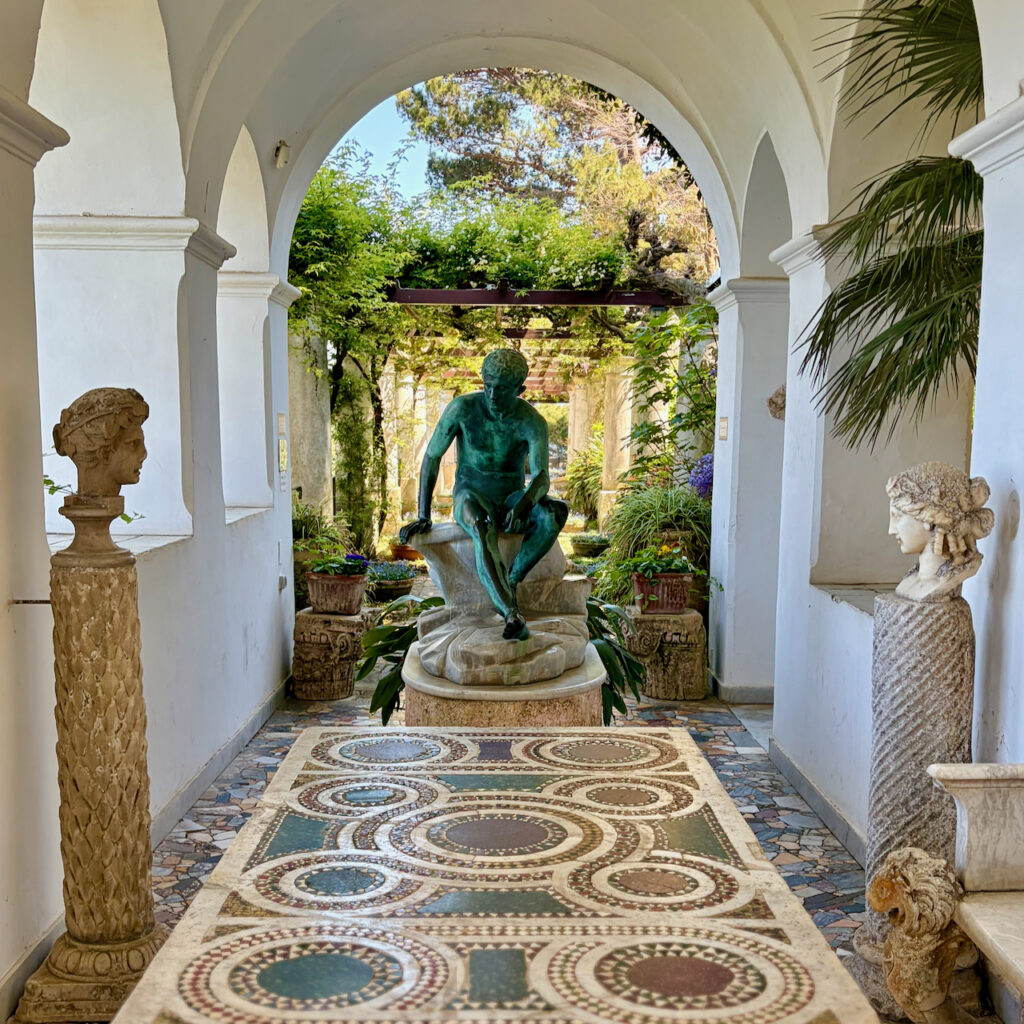
Walking through the garden of Villa San Michele, I stopped at a small sign. The text on it was plain, almost incidental, a short explanation of how one part of the building came into being. It was not profound. That was precisely its force. It triggered a thought that has only hardened since: good architecture is born from the thing itself.
Not from form. Not from “function” in the thin, exhausted sense either. The word that matters here is more exact: the thing. The inner matter of a building. Its necessity. Its charge. The condition that calls it into being before it becomes an image.
This is why the familiar opposition between form and function is not simply crude. It is illusory. It confuses a tool of description with the reality of architecture. It imagines that a building can be divided into two domains, one formal, one functional, which then enter into some negotiated relation. But architecture does not begin with two terms. A real building is not first a form that later absorbs a use. Nor is it first a use that later receives a shape. In architecture worthy of the name, that separation never truly exists.
The thing is never formless. Form is never free.
That is the point. Not that form follows function. Not that function generates form. Both claims remain trapped in the same fiction. They preserve the illusion that architecture is assembled from separable categories. It is not. Architecture begins where that division loses all meaning.
This is also why architecture, however close it may come to sculpture, can never be reduced to it. It may borrow from the visual arts. It may appear autonomous, mute, excessive, calm, sculptural, even image-like. But it is never autonomous in the way an artwork can be. It does not stand outside the world. It is bound into it. Into use, ritual, institution, publicness, memory, labor, representation. Into a shared order of things. That is not a limitation imposed on architecture from outside. It is the ground of the discipline.
The strongest buildings are not the ones that free themselves from this ground. They are the ones that become inseparable from it. Museum, station, house, chapel, library, school: the type is secondary. What matters is that the building does not hover above its own reason. It does not perform freedom. It does not aestheticize detachment. It takes its origin seriously.
Good architecture does not emerge from formal invention alone. And it does not emerge from use understood as a brief. It emerges when the thing at stake becomes spatial, material, and unavoidable. When a building can no longer be imagined as anything other than what it is becoming.
Architecture starts there: where a thing demands room.